



The best time to visit the Philippines is December to April, the dry season on most islands. December to February is the coolest and breeziest stretch, and March to May is hot, with calm seas that are ideal for island hopping and diving. June to November brings the southwest monsoon and most typhoons, peaking July to October.
That’s the short answer. It holds for Manila, Palawan and most of the western islands, but the Philippines is more than 7,000 islands spread across two monsoon systems, so “dry season” doesn’t mean the same thing everywhere. Siargao, for example, gets its wettest weather right when El Nido is at its sunniest. Here’s the breakdown by month and by destination.

What are the seasons in the Philippines?
PAGASA, the national weather bureau, splits the year into two seasons: a rainy season from June to November and a dry season from December to May. Locals split the dry season again. December to February is the cool dry season, when the northeast monsoon (amihan) brings cooler, drier air. March to May is the hot dry season: amihan fades and the heat builds until the southwest monsoon (habagat) arrives.
The dates shift a little each year. In 2026 PAGASA declared the start of the rainy season on June 4, after several days of habagat rain over western Luzon and the Visayas.
[Inline graphic: seasons-by-month strip (SVG, in the HTML version). Caption: The dry and rainy seasons, based on PAGASA’s season definitions and typhoon statistics. This pattern fits the west side of the country best.]
When is typhoon season in the Philippines?
According to PAGASA, about 20 tropical cyclones enter the Philippine Area of Responsibility each year, and roughly 8 or 9 of them actually cross the country. The peak runs from July to October, when close to 70% of typhoons develop. Storms can form outside those months, but the odds are much lower from January to April.
What does that mean for you? A typhoon can cancel ferries, flights and boat tours for a day or two. If you’re travelling from July to October, keep a buffer day before your flight home and don’t chain five island hops together with no slack.
Best time to visit the Philippines, month by month
| Months | Season | What to expect | Good for |
| December to February | Cool dry (amihan) | Coolest, least humid months on the west side; breezy, some choppy crossings | Beaches, Manila city days, mountain trips, El Nido and Coron |
| March to May | Hot dry | Hottest months, calmest seas, busy local holidays around Holy Week | Island hopping, diving, Siquijor and Bohol, Siargao |
| June | Start of rainy season | Habagat rains begin on the west side; showers often short at first | Quieter beaches, Siargao |
| July to October | Rainy, peak typhoons | Heaviest rain on western coasts and the highest typhoon risk | Flexible travellers, Siargao, waterfall trips |
| November | Transition | Habagat weakens and amihan takes over; the west starts to dry out | An early start to beach season |
When is the best time to visit each destination?
Here’s how the seasons play out in the places we run tours, based on PAGASA’s climate types and our destination guides.
| Destination | Best months | Why |
| Manila and day trips | December to April | Classic dry-season pattern; April and May are very hot |
| El Nido and Coron | December to May | Northwestern Palawan has a pronounced dry season; calm seas for boat tours |
| Bohol and Panglao | February to May | Rain is spread fairly evenly through the year, so aim for the calmer months |
| Siquijor | February to April | Sunny, calm crossings from Bohol and Dumaguete |
| Moalboal | November to May | Best diving conditions; the sardine run happens year-round |
| Siargao | March to September | East-facing island with its heaviest rain from December to February |
| Sagada and Banaue | Dry months, roughly December to April | Mountain roads are easier and viewpoints clearer outside the heavy rains |
Manila
Manila follows the textbook pattern: dry from December to April, wet from June to November. The cooler months are the most comfortable for walking tours like our free Intramuros walking tour or the full Manila city tour. April and May get brutally hot, so book city days for the early morning and save the afternoon for somewhere cooler, like one of the best waterfalls near Manila.
El Nido and Coron
Northwestern Palawan is one of the clearest dry-season areas in the country, which is why December to May is peak time for boat tours. Coron operators report a similar pattern. Late December is holiday season, so book atleast a few weeks ahead. Read our El Nido travel guide for getting there, compare the two in our El Nido vs Coron guide, and see the El Nido Tour A or the Coron Super Ultimate tour when you’re ready to book.
Bohol and Siquijor
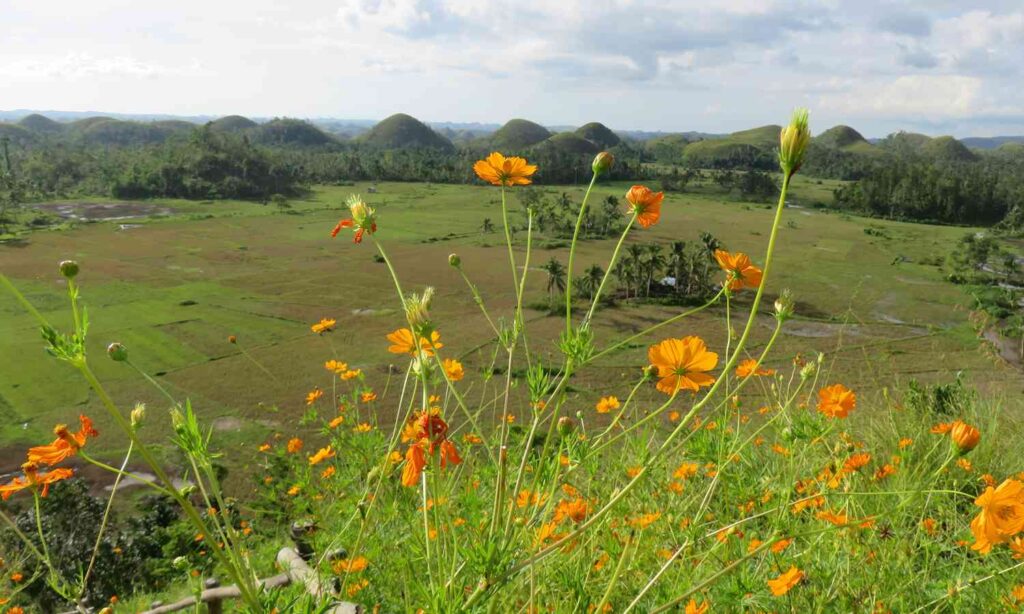
Bohol doesn’t have a sharp dry season: rain is spread more evenly across the year than in Manila or Palawan. That makes it a solid year-round choice, though February to May usually gives the calmest seas for the Pamilacan Island tour and a dry day for the Bohol countryside tour. Siquijor is at its best from February to April, with sunny skies and smooth ferry crossings, and our Siquijor itinerary goes month by month. Pair them on the Bohol and Siquijor package.

Photo: Dafna Tal
Moalboal
The Moalboal sardine run happens year-round, and the sea turtles live on the reef permanently. For the calmest seas and best visibility, go from November to May and skip the peak typhoon months. See our Moalboal travel guide, and for a day out of the water, the Kawasan Falls canyoneering tour keeps divers and hikers on seperate schedules happy.
Siargao
Siargao flips the usual script. The Surigao provinces have no real dry season and get their heaviest rain from December to February, exactly when Palawan is at its best. For calm water and sunshine, March to September is the better window. Surfers often come from August to November for the swell, so expect more wind and some rain then. Our non-surfer’s guide to Siargao has the full picture, and the Siargao tri-island hopping tour works best on those calm-sea days.

Sagada and Banaue
The Cordillera mountains have only a short dry season, so the drier months from December to April are the safest bet for long bus rides and clear viewpoints. Mornings are cold up there, so pack a warm layer whatever the month. See our Sagada guide and Banaue rice terraces guide, or let us handle the logistics on the 4-day Sagada and Banaue tour.
Is the rainy season worth it?
It can be. On the west side, rain usually comes as heavy afternoon or evening downpours rather than all-day grey, especially in June and November. You’ll definately see fewer tourists, and the rice terraces and waterfalls look their greenest. The real risk isn’t the rain. It’s a typhoon arriving in the middle of your trip, which is why flexibility matters more than the date itself.
A few rainy-season tips: book changeable domestic flights and ferries, pick one or two bases instead of five, get travel insurance that covers weather delays, and check PAGASA’s bulletins the night before any boat day. Holy Week is worth a mention too. It’s one of the the busiest domestic travel weeks of the year, so check its dates before you lock in ferries and buses. Travelling alone? Our solo travel guide has more planning tips.
Does the whole country have the same dry season?
No, and generic guides often miss this. The Philippines has four climate types. The “dry November to April, wet the rest of the year” pattern (Type I) fits western Luzon, Metro Manila, Batangas, the Ilocos Region and northwestern Palawan. Some east-facing areas, including the Bicol Region, northeastern Samar, Southern Leyte and the Surigao provinces, are Type II, with no real dry season and a rain peak from December to February. Others, like Bohol and large parts of Mindanao, get rain spread fairly evenly through the year.
So if your trip mixes Palawan with Siargao, its worth checking each island separately rather than trusting one national rule. Not sure where to start? Our best places to visit in the Philippines guide compares the main islands, and our island hopping guide helps you pick where to spend your boat days.
My take: when should you go?
If you can pick any dates, go from late February to April. The western islands are dry, Bohol and Siquijor are at their calmest, the Christmas rush is over, and the typhoon risk is low. If Siargao is a must, push the trip toward April or May so it lines up with Palawan too. Short on time? Our Philippines package tours bundle the logistics for you.
Frequently asked questions
What is the best month to visit the Philippines?
For most travellers, March. It’s dry on the western islands, seas are calm for island hopping, and Bohol and Siquijor are at their best. February and April are close runners-up.
What months are typhoon season in the Philippines?
Typhoons can form any time, but the peak runs from July to October, when PAGASA says nearly 70% of them develop. About 20 tropical cyclones enter Philippine waters in an average year.
Is it worth visiting the Philippines in the rainy season?
Yes, if you stay flexible. Showers are often short, especially in June and November, and beaches are quieter. Build in buffer days and keep ferries and boat tours changeable in case a storm comes through.
When is the dry season in the Philippines?
Officially December to May, with a cool dry season from December to February and a hot dry season from March to May. Some eastern areas, like Siargao and Bicol, don’t have a pronounced dry season.
When is the best time to visit Siargao?
March to September usually brings the calmest seas and sunniest days. December to February is the wettest stretch. Surfers often visit from August to November for the swell.
When is the best time to go island hopping in the Philippines?
March to May, when seas are at their calmest across most of the country. December to February is also good in Palawan, though some crossings can be choppy when the amihan wind is strong.
Is December a good time to visit the Philippines?
December is dry and pleasant in Manila, El Nido and Coron, but it’s also the busiest holiday period, so book early. East-facing islands like Siargao can be wet then.
Photo: Dafna Tal
Still not sure which month fits your route? Browse our island hopping tours or contact our team with your dates, and we’ll suggest a plan that works with the weather.


